
Best Beaches from Tropea to Capo Vaticano by Boat
Best Beaches from Tropea to Capo Vaticano: Discover the Coast of the Gods by Boat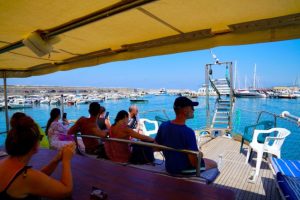
The coastline between Tropea and Capo Vaticano, in Calabria, southern Italy, is one of the most beautiful stretches of the Tyrrhenian Sea. Famous for its turquoise waters, dramatic cliffs, sea caves and hidden coves, the Costa degli Dei, or Coast of the Gods, offers spectacular scenery and unforgettable swimming opportunities.
From the iconic Sanctuary of Santa Maria dell’Isola in Tropea to the white sandy seabed of Grotticelle Bay, every stretch of coastline has something special to discover.
But which are the best beaches to visit between Tropea and Capo Vaticano? And is it better to rent a small boat or join an organised boat tour?
In this guide, we will take you along the coast, introducing you to some of its most beautiful beaches, caves and natural landmarks, in the order you encounter them when travelling south from Tropea towards Capo Vaticano.
Renting a Boat or Joining a Boat Tour from Tropea?
Exploring the Coast of the Gods by sea is an incredible experience, especially during the summer. However, navigating these waters requires attention, experience and knowledge of local conditions.
During the high season, the sea can be busy with boats of different sizes, swimmers and snorkellers. Wind, currents, underwater rocks and local navigation rules must also be taken into consideration.
Before renting a boat, ask yourself a few important questions:
- Do you have the necessary boating licence, if required, and experience handling a boat?
- Are you familiar with navigation regulations, safety distances and restrictions near beaches and swimming areas?
- Do you know how to recognise changing sea conditions and respond safely?
If you are unfamiliar with local waters, joining an organised boat excursion with an experienced crew is a convenient way to explore the coastline without having to navigate yourself.
Aboard Blue Ocean, departing from the port of Tropea, you can discover the Coast of the Gods with a knowledgeable crew, enjoy stops for swimming and snorkelling, and learn about the area’s history, legends and natural wonders.
The 14 Best Beaches and Places to Visit Between Tropea and Capo Vaticano
Here are some of the most fascinating beaches, bays, sea caves and coastal landmarks to discover along this beautiful stretch of the Calabrian coast.
1. Spiaggia del Cannone – Cannone Beach, Tropea
Located just outside the port of Tropea, next to the San Leonardo rock, Spiaggia del Cannone is one of the town’s smallest and most secluded beaches.
It is often quieter than Tropea’s main beaches and offers a different perspective of the town’s dramatic coastline. The nearby Piazza Cannone takes its name from cannons reportedly discovered in the area.
2. Mari Picciulu – Tropea’s Small Beaches
In the local Calabrian dialect, Mari Picciulu means “small sea”. This stretch of coastline lies between the San Leonardo rock and the famous Santa Maria dell’Isola promontory.
It includes several small beaches and coves, including Spiaggia della Rotonda, Spiaggia delle Roccette and Spiaggia della Linguata. Their clear waters and views of Tropea’s historic centre make them among the most recognisable seaside locations in the area.
3. Santa Maria dell’Isola – Tropea’s Iconic Landmark
The Sanctuary of Santa Maria dell’Isola is one of the most photographed landmarks in Calabria and the unmistakable symbol of Tropea.
Perched on a rocky promontory overlooking the sea, the sanctuary dominates the town’s coastline. The rock was once separated from the mainland by the sea, which explains the name Isola, meaning “island”.
From the water, you can also admire the Grotta del Palombaro, a sea cave near the promontory. The surrounding cliffs, the sanctuary and the turquoise sea create one of the most memorable views along the Coast of the Gods.
4. Mari Randi – Tropea’s Main Beach
Mari Randi, meaning “big sea” in the local dialect, refers to the extensive stretch of coastline below Tropea’s historic centre.
This long beach is divided into different sections, including Marina del Convento, named after the nearby convent of the Friars Minor, as well as other sandy stretches and rocky landmarks.
The contrast between the pale sand, clear water and towering cliffs is particularly beautiful when viewed from a boat.
5. Spiaggia ‘o Sapuni – The Soap Beach
Spiaggia ‘o Sapuni takes its name from the large, smooth-looking rocks that resemble bars of soap.
Like many coastal formations around Tropea, these rocks have been shaped by the sea over time. The area is another example of the distinctive geological landscape that makes the Costa degli Dei so fascinating to explore.
6. Spiaggia dell’Occhiale – The Glasses Beach
Spiaggia dell’Occhiale is named after two large openings in a rocky ridge that resemble a pair of glasses when viewed from a particular angle.
It is one of the more unusual natural features along this coastline and a reminder that the beauty of the Coast of the Gods extends beyond its sandy beaches.
7. Grotta dello Scheletro – The White Cave
Grotta dello Scheletro, also known as the White Cave, is a fascinating coastal cavity near Tropea.
Its name is associated with the pale appearance created by the light reflecting off the rock and the water inside. From the sea, the cave offers a striking contrast between its bright surfaces and the surrounding blue water.
The cave is one of the memorable natural sights to look out for during a boat trip along this part of Calabria.
8. Scogli dei Gabbaturchi – The Rocks of Gabbaturchi
The Scogli dei Gabbaturchi are rocky formations marking a stretch of coastline towards Santa Domenica di Ricadi.
According to local tradition, their name is connected with the Calabrian word gabbu, meaning deception or trickery, and stories of attempts to mislead Turkish vessels approaching the coast in the past.
Like many places along the Costa degli Dei, the rocks combine a distinctive natural setting with local legends passed down through generations.
9. Baia di Riaci – Riaci Bay
Riaci Bay, near Santa Domenica di Ricadi, is one of the most popular coastal areas between Tropea and Capo Vaticano.
The bay is known for its clear water, sandy seabed and imposing Riaci rock, a large formation rising from the sea. From certain viewpoints, the rock resembles the outline of a ship.
The surrounding rock formations also feature cavities associated with wartime explosions, according to local accounts. The bay is particularly attractive for swimming and snorkelling when sea conditions allow.
During a boat excursion, Riaci offers a wonderful opportunity to admire the coastline from the water and enjoy a refreshing swim.
10. Formicoli – The Ancient Roman Port of Forum Herculis
Formicoli is known for the rocky formations located just offshore and for its historical connection with the ancient Roman port traditionally identified as Forum Herculis.
The name Formicoli is often associated with the resemblance of the rocks to a group of ants when viewed from a distance. The area is also of archaeological interest because of its ancient maritime history and submerged remains.
Today, the clear water and underwater landscape make this stretch of coast appealing to snorkellers and divers.
11. Torre Ruffa – A Beach Beneath an Ancient Watchtower
Torre Ruffa is a coastal area named after an old watchtower that once formed part of the defensive network along the Calabrian coastline.
Together with other historic towers in the Ricadi area, it recalls the period when watchtowers were used to monitor the sea and warn coastal communities of approaching danger.
The long beach and surrounding Mediterranean landscape make this an attractive stretch of the coastline between Tropea and Capo Vaticano.
12. Scoglio di Vadaro – An Underwater Natural Landmark
Scoglio di Vadaro is a rocky formation rising above the sea near Capo Vaticano, with underwater sections that attract marine life and diving enthusiasts.
The surrounding seabed offers opportunities to observe the underwater environment, although diving and swimming activities must always take account of local conditions, boat traffic and safety requirements.
Viewed from a boat, the rock is another distinctive landmark along this spectacular stretch of the Tyrrhenian coast.
13. Praia di Fuoco – The Fire Beach
Praia di Fuoco, meaning “Fire Beach”, is one of the most celebrated coastal areas around Capo Vaticano.
Its small sandy coves are framed by impressive cliffs and rocky formations, creating a wild and secluded landscape. The combination of bright sand, rugged granite and exceptionally clear water makes this area one of the highlights of the Coast of the Gods.
Access to these coves can be difficult from land, making a boat excursion an excellent way to admire them from the sea.
The name Praia di Fuoco is often associated with the warmth retained by the rocks exposed to the summer sun. When sea conditions permit, the surrounding waters are ideal for appreciating the area’s extraordinary colours.
14. Grotticelle Bay – The Caribbean of Calabria
Grotticelle Bay is one of the most famous seaside destinations in Capo Vaticano and a highlight of the Costa degli Dei.
Located below the Capo Vaticano headland, the bay is renowned for its pale sandy seabed, turquoise water and beautiful underwater scenery. It is often nicknamed the “Caribbean of Calabria” because of the intense colours of the sea.
The bay is also associated with the famous Calabrian herbal liqueur Amaro del Capo, whose bottle label features the distinctive coastline of Capo Vaticano.
Grotticelle is a wonderful place to swim, snorkel and admire the scenery. On an organised boat trip, you can enjoy the bay from the water and discover its beauty from a different perspective.
Discover the Coast of the Gods on a Boat Trip from Tropea
 The beaches, caves and rocky formations between Tropea and Capo Vaticano represent only a small part of the natural and historical heritage of this extraordinary coastline.
While some beaches are easily accessible from land, others are best appreciated from the sea. A boat excursion allows you to admire the cliffs, explore coastal caves from the water and enjoy swimming stops in some of Calabria’s most beautiful bays, subject to sea and weather conditions.
Join the Blue Ocean Boat Tour from Tropea
Discover the Coast of the Gods aboard Blue Ocean, a comfortable motorboat departing from the port of Tropea.
Our three-hour boat tour towards Capo Vaticano combines coastal sightseeing, opportunities to swim and snorkel in crystal-clear waters, local stories and a traditional Calabrian aperitif on board.
With an experienced crew and beautiful views throughout the journey, it is an unforgettable way to experience the coastline between Tropea and Capo Vaticano.
Ready to explore the best beaches of the Coast of the Gods?
Book your Tropea–Capo Vaticano boat tour with Blue Ocean
Learn more about Blue Ocean and our boat excursions from Tropea.
See you on board!
Luigi Barillari
Costa degli Dei Tours – Blue Ocean, Tropea, Calabria, Italy